〰️〰️ IN 〰️
These are things I read, saw, ingested, ate, listened to, or just generally thought about in the last month that I want to share with you. It's an incomplete list (obviously) but it's the stuff I'm still thinking about.
namibia: country of 1000 planets
In January of 2024 I spent some time in Namibia reporting for Tested. (If you still haven't listened to Tested, please do, it is sadly still very relevant to the women's sports debates we're having over, and over, and over again right now.)
When you go somewhere as a reporter, you get a specific kind of view of a place. Often it's a uniquely intimate one — you go to people's houses, see what their real lives are like, eat with them, party with them. In my case, I spent all of my time i Namibia with Christine Mboma and her coach Henk Botha shadowing their real, daily lives. Which in this case meant spending a lot of time in two places: at the gym, and at the track. Christine was generous enough to invite me up to Rundu, to see where she grew up and where her family still lives. Rundu sits right on the border of Namibia and Angola and it's beautiful — lush and green, with rivers full of alligators. But mostly, I saw the life of an athlete. Wake up, go to the gym, go to the track, eat, sleep.
It's hard to explain, sometimes, why a certain place captures you. On that trip I saw very little of Namibia, really. And yet when I returned home,I knew I really wanted to go back. Not just because I missed out on the iconic, touristy bits — the dunes, the skeleton coast, the rhinos — but because something about the country really spoke to me. I still don't know how to explain what it is (and my various attempts, mostly deleted from this draft, give me a new respect for travel writers) but I do have one thing I can share with you. Namibia is a country full of planets.
Here's a fact to set the stage: Namibia is the second least densely populated country in the world. The only place with fewer people per square kilometer is Mongolia. The vastness of the place is immediately apparent as you travel through it. Many days, we'd go for hours and hours without seeing another vehicle, let alone a town or village. But vastness is not the same as emptiness. Namibia is full of many things — cool plants, interesting birds, gigantic dunes. But perhaps what Namibia has most of is landscapes.
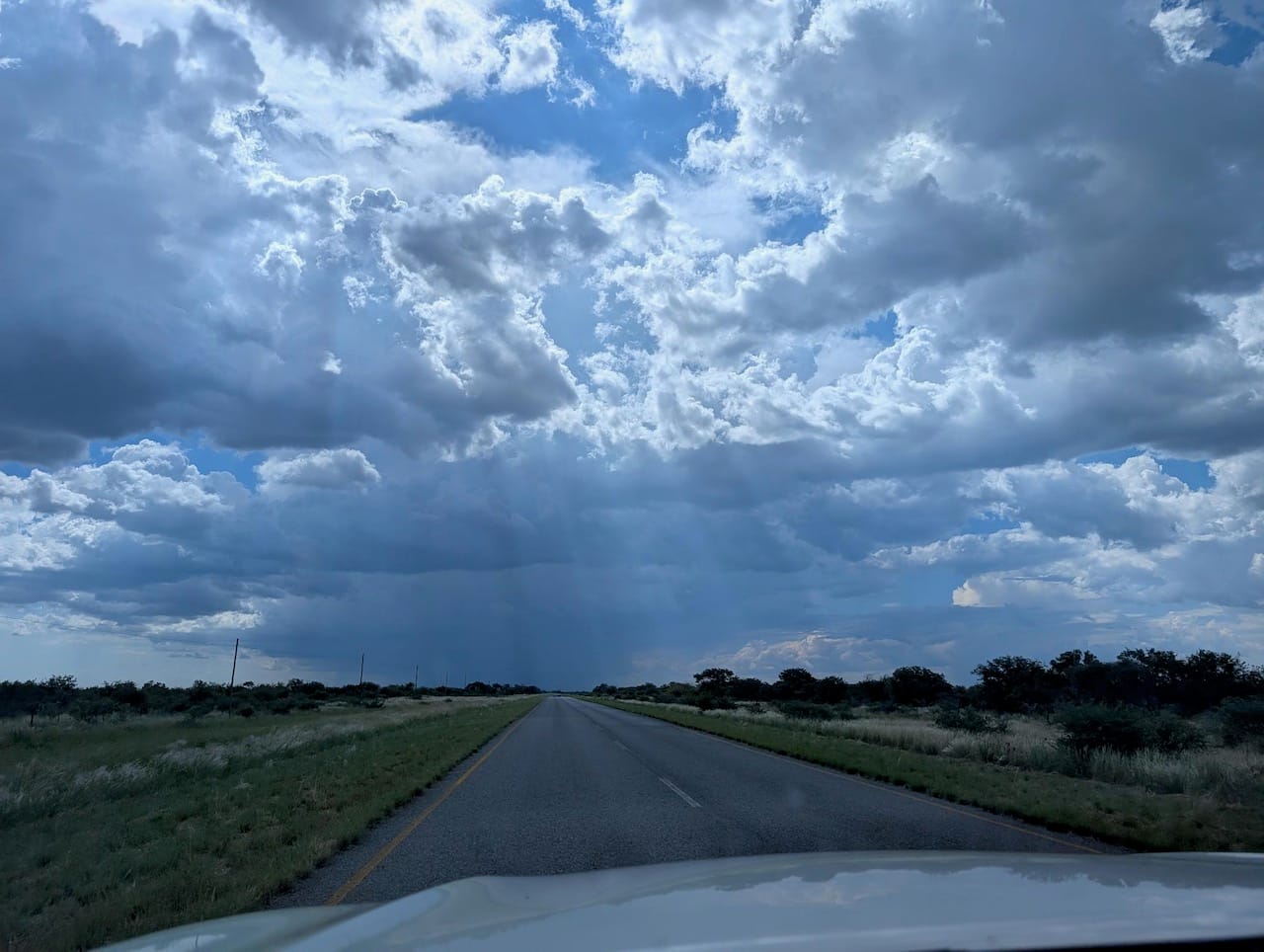
Over the course of five days we drove nearly 2,000 km. And as we drove, it became common for someone to call out "new planet!" That really was how it felt. In the morning, we'd begin on a green planet, with a blue-grey sky and a soft, ethereal lighting and giraffes watching us from the trees.
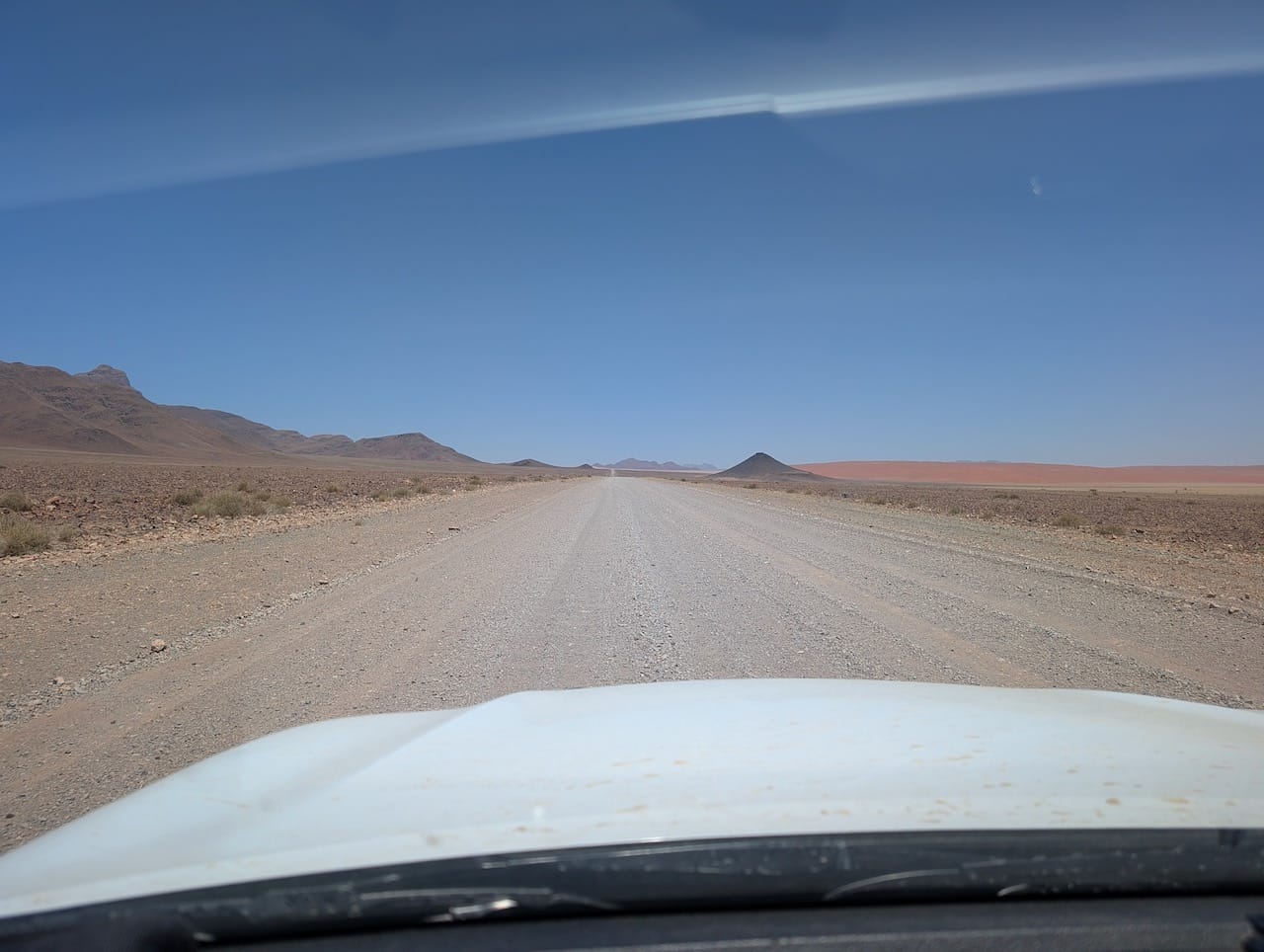
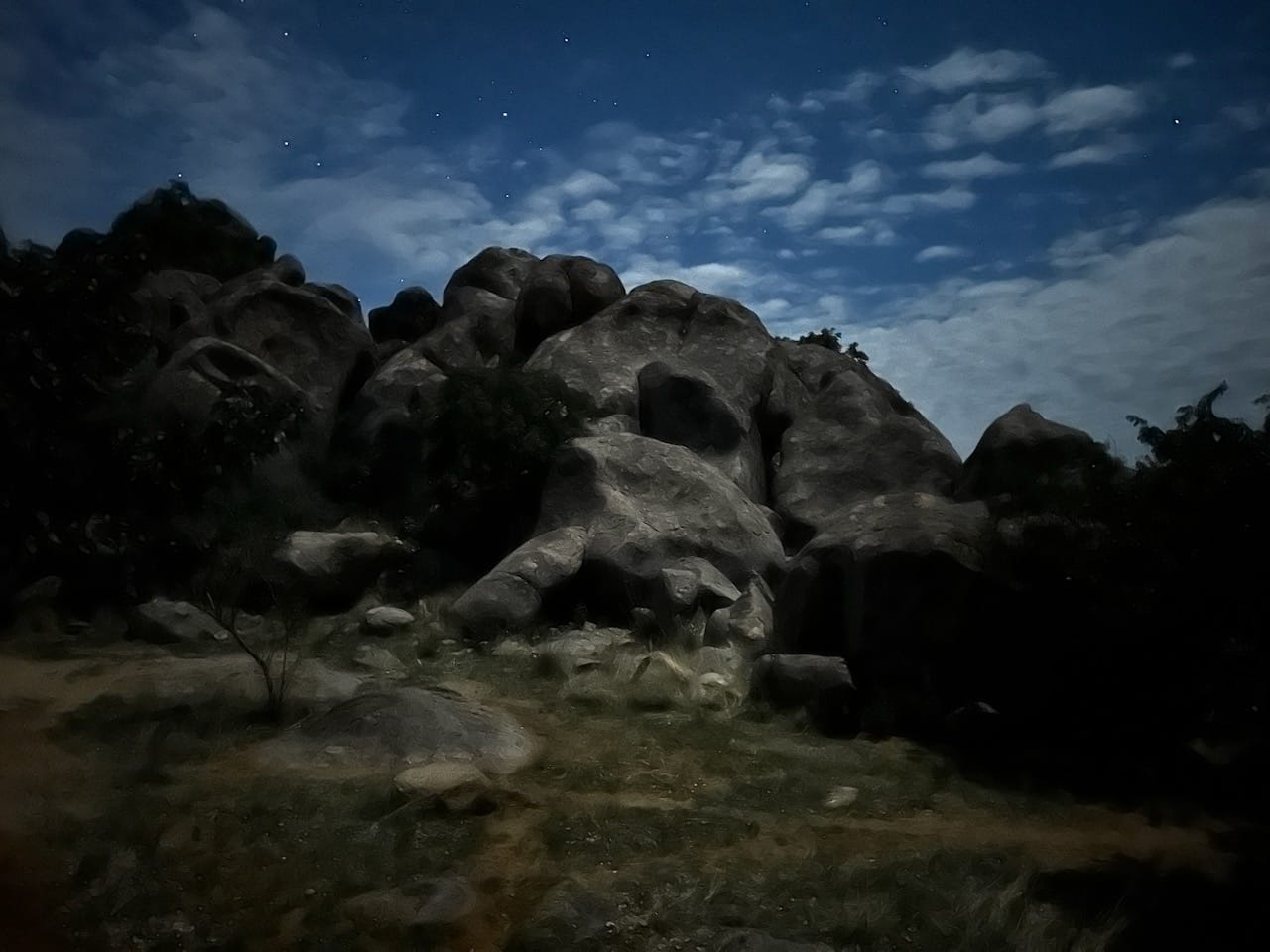
Then, we'd drive through a sea of boulders, some of whom might have at some point touched Brazil, 120 million years ago. A few hours after that, we'd turn into a canyon edged by green rocks and strange reddish plants.
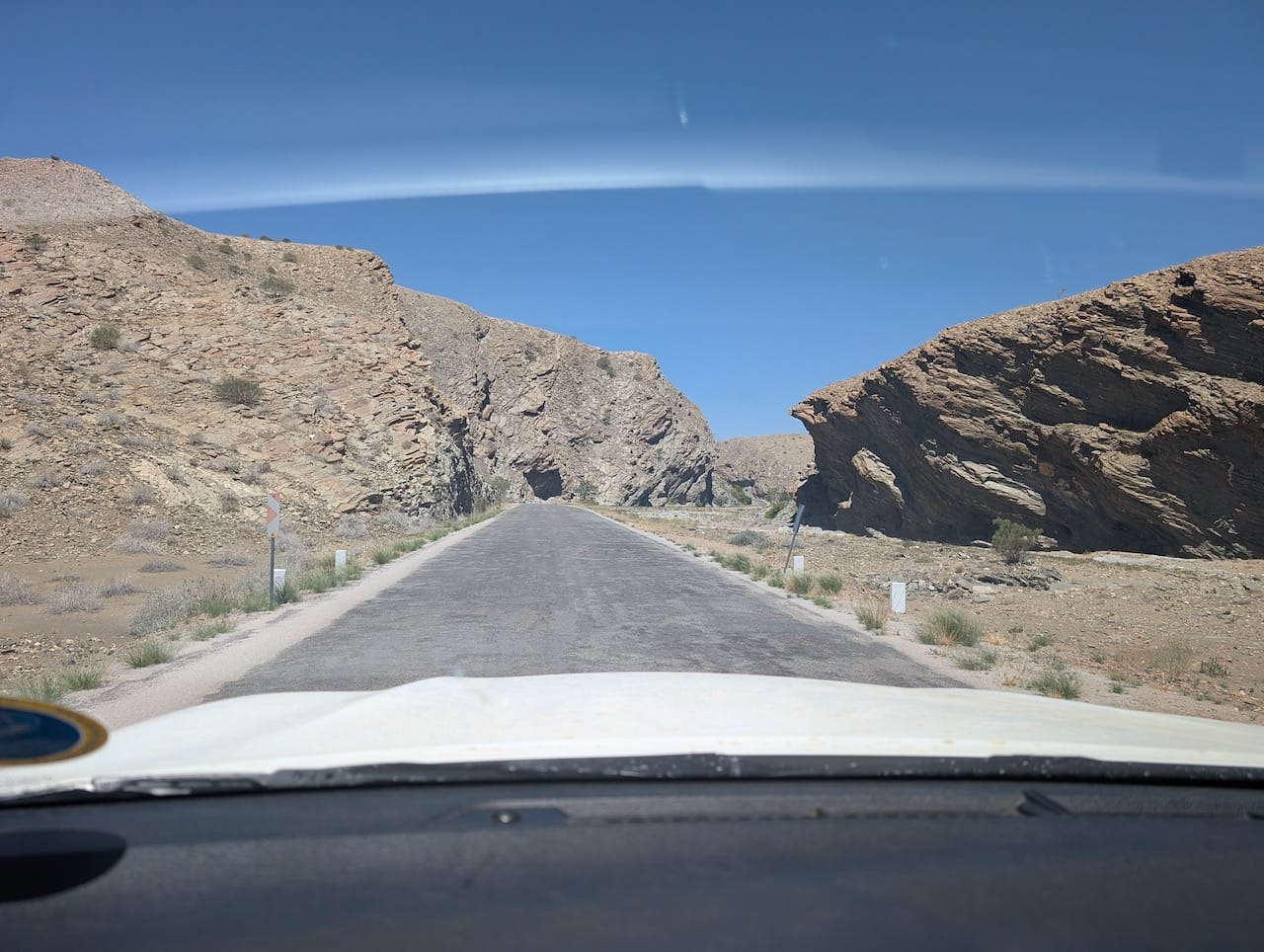
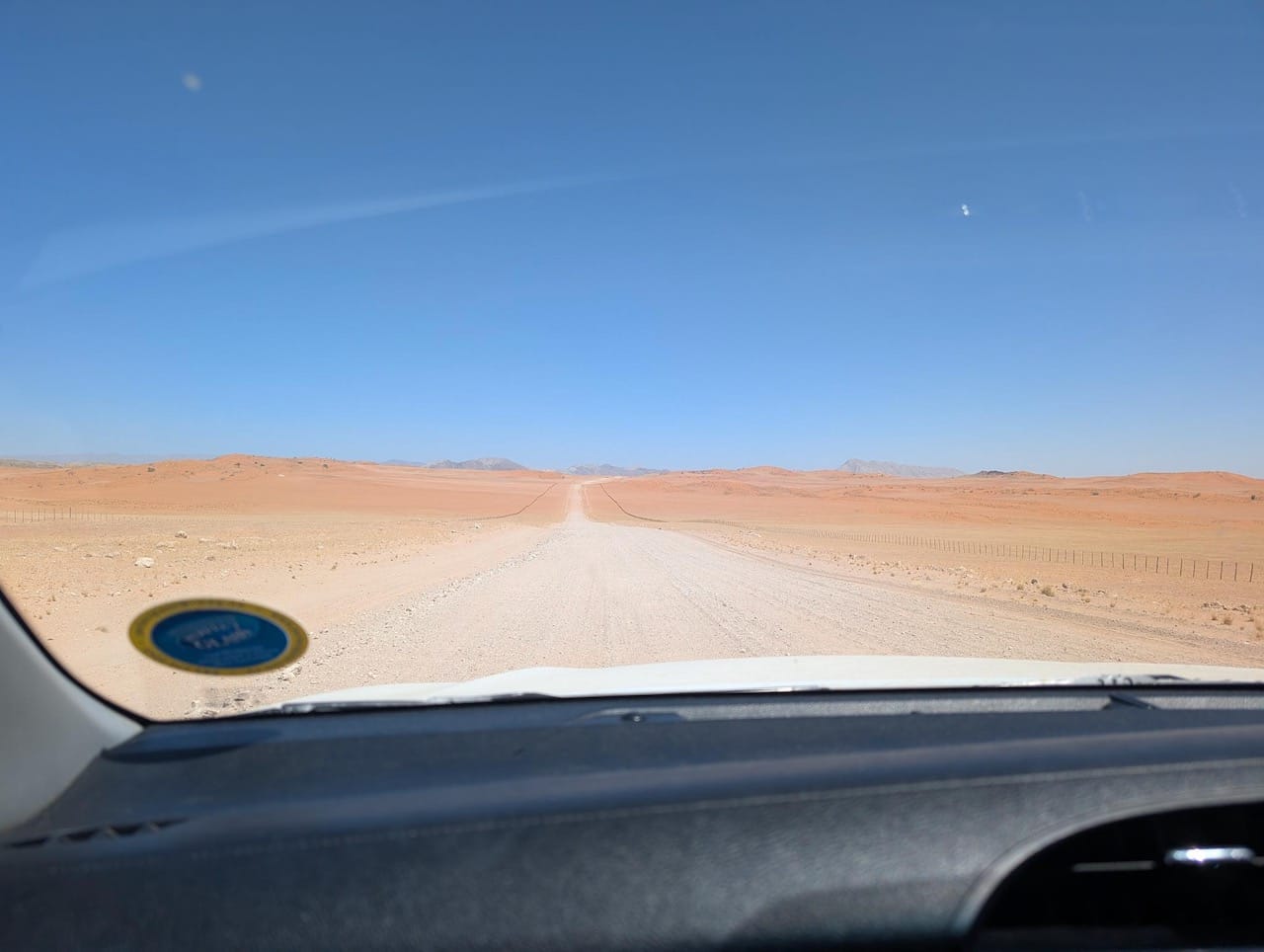
The next day, we'd drive through the kind of desert where it feels like even the sand is trying to escape the brutal sun, fleeing out, endlessly into the distance. And then later in the trip, we'd be in a different desert entirely — one that feels cold and flat in a an entirely different way.
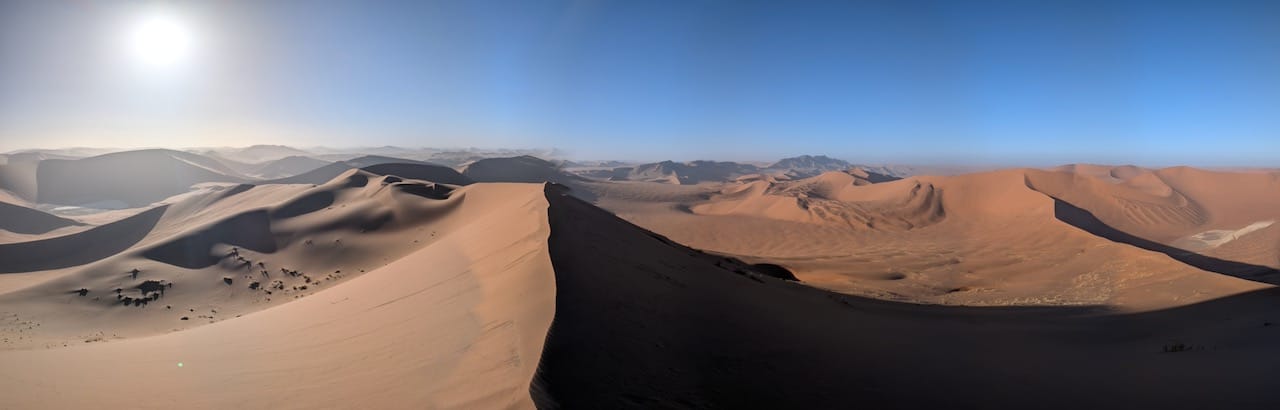
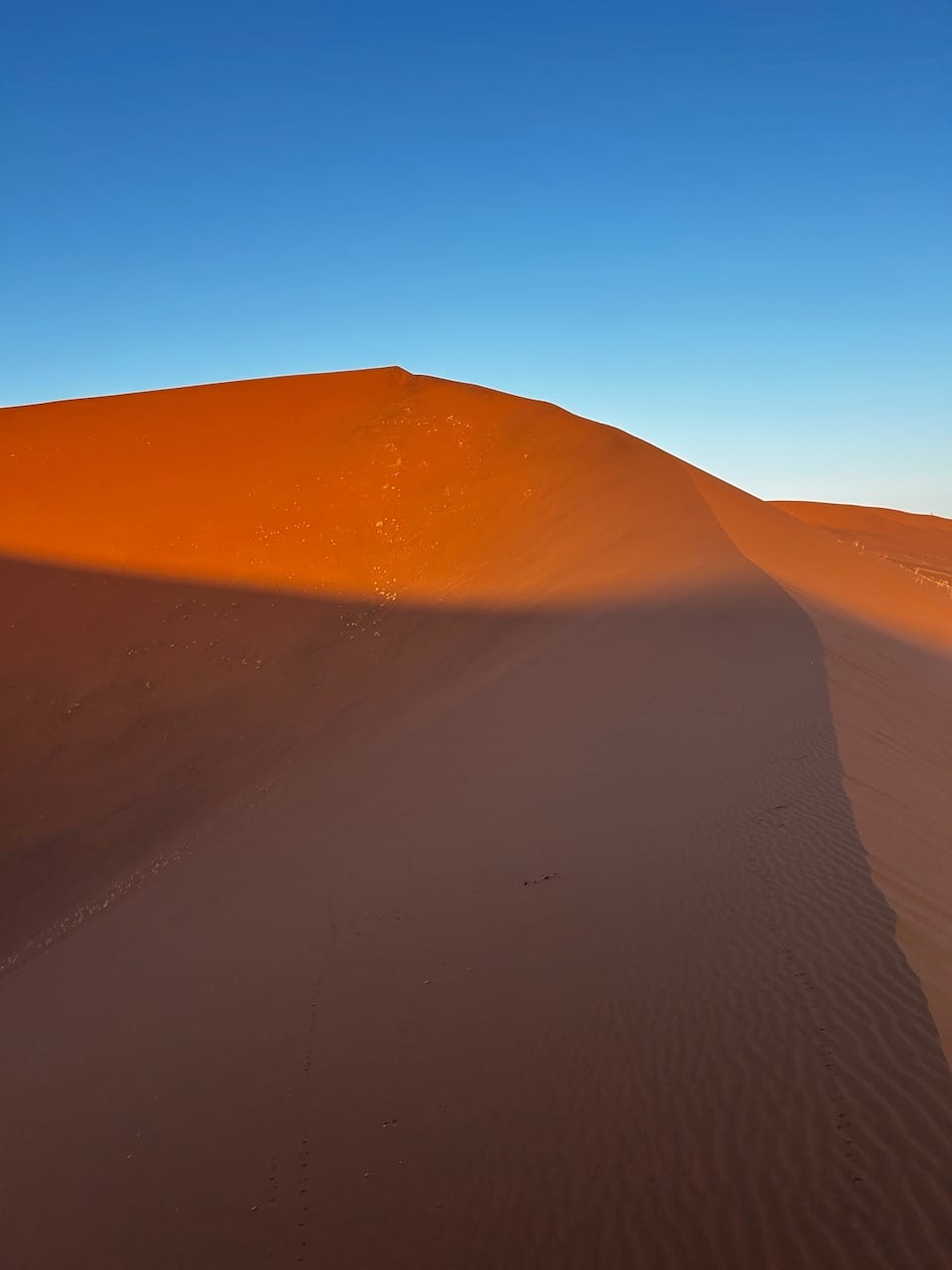
From there, we'd turn into a sea of red dunes, whose sand had originally come from a mountain in South Africa that was blown out to sea, and then back onto land to find its final home in Namibia, making the oldest desert in the world.
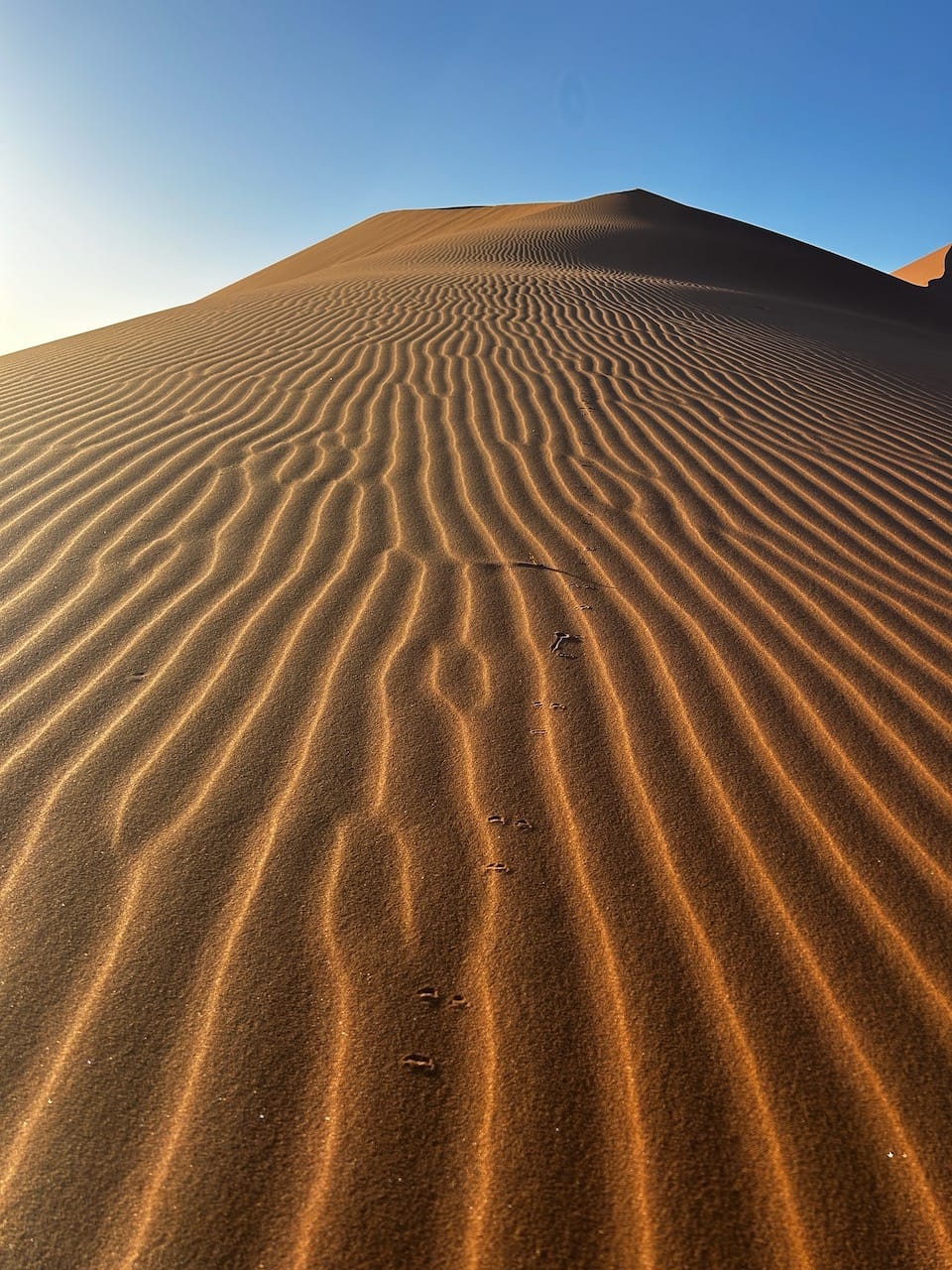
Along the way, across these planets, we saw desert foxes, huge glittering geodes, baby zebra hiding in the shade, and raptors soaring against a cloudless sky. At night, there were so many stars that I wondered how ancient people had created the constellations in the first place, when there are so many little points of light to choose from.
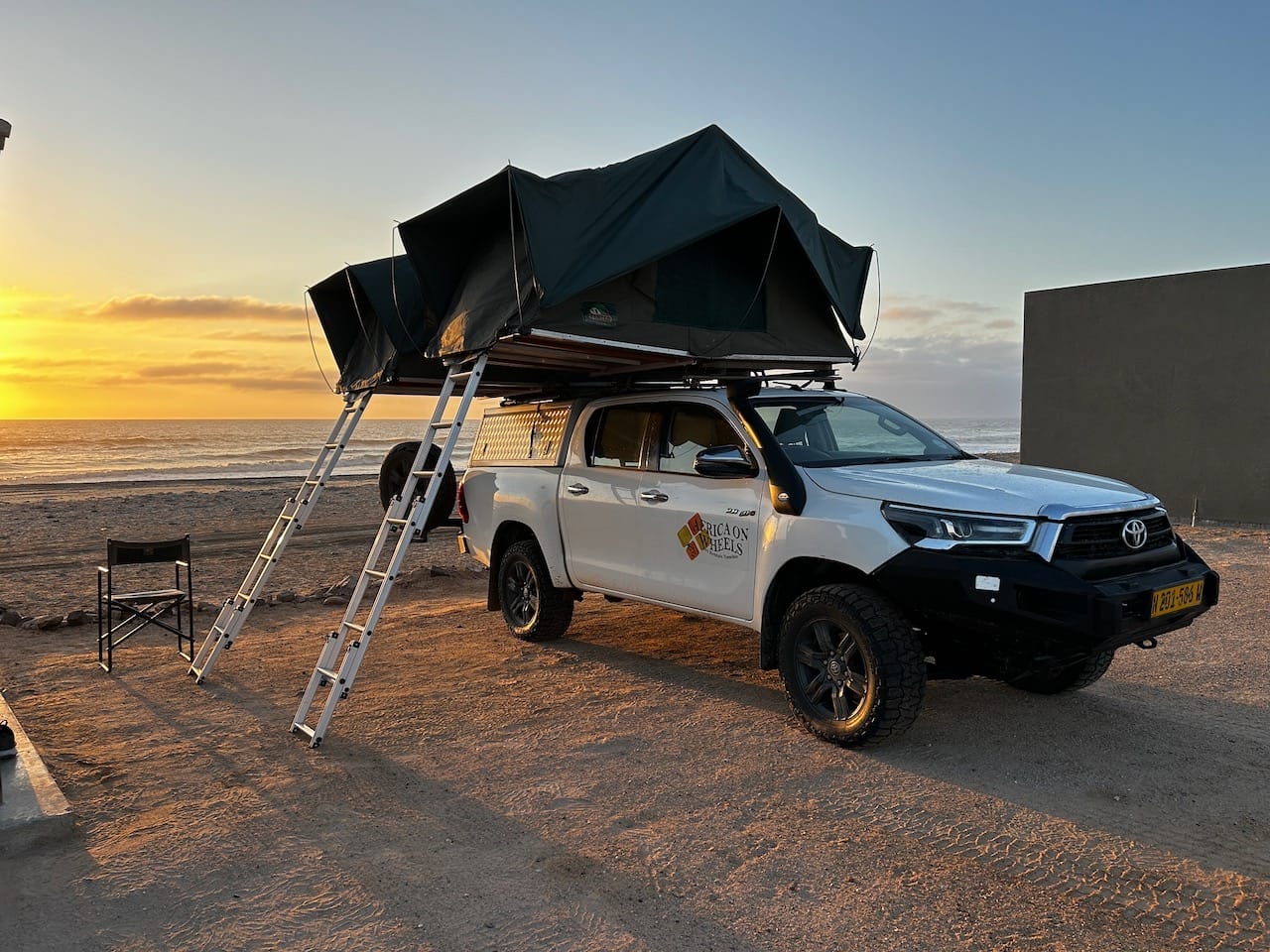
One night, I woke up at 3am and sat outside our tents for a while, listening to the landscape. The moon was bright enough that I could take this strange, painting like photo on my crappy old iPhone.
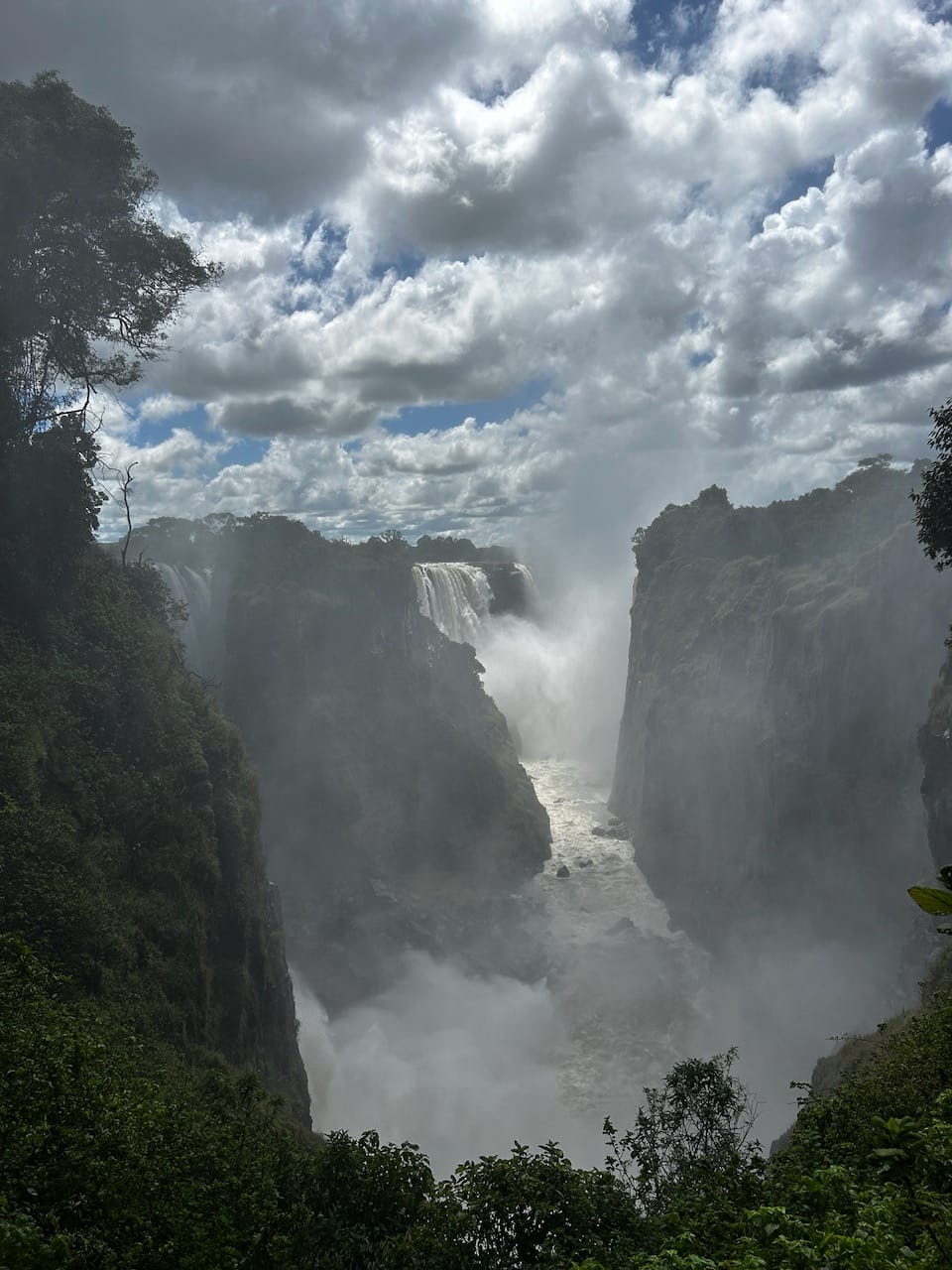
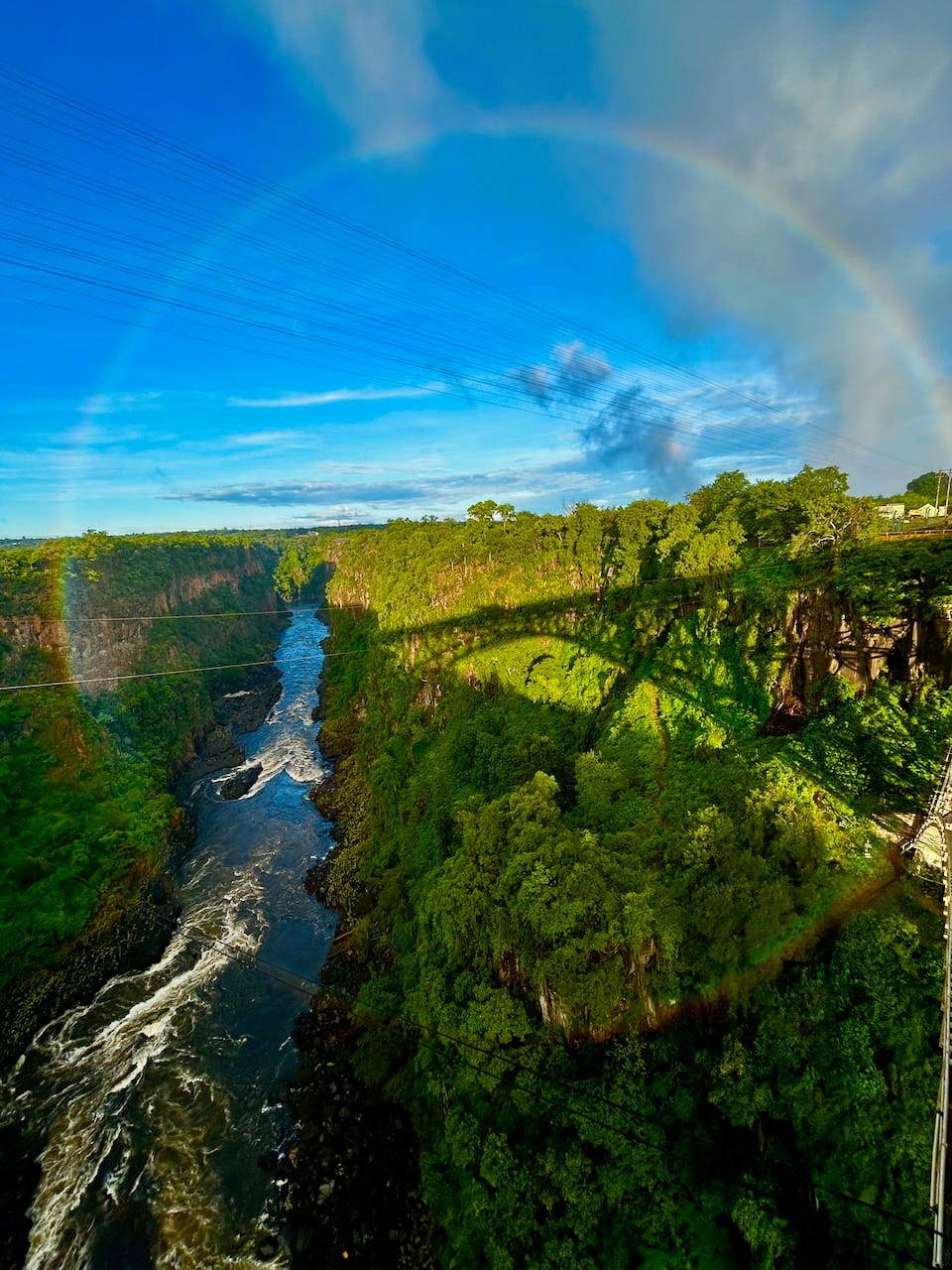
We did, of course, do a lot of the touristy stuff too. We climbed Big Daddy Dune, and we saw the shipwrecks on the Skeleton Coast and the cape fur seals at Walvis Bay (although I was more impressed by the giant white pelicans that hang around the boats). After Namibia, we went to Zimbabwe to see Victoria Falls — whose Lozi name, Mosi-oa-Tunya is not only more beautiful phonetically but also more poetic, meaning "the smoke that thunders." From there we traveled to Botswana, to Chobe National park where we were the annoying birders asking to stop constantly in a safari jeep full of people who just wanted to see lions. (Don't worry, we converted at least a few of them to the glorious world of birds. And after, one of our drivers thanked us. "I love people like you," he said, "when you are interested in everything, you're never disappointed.")
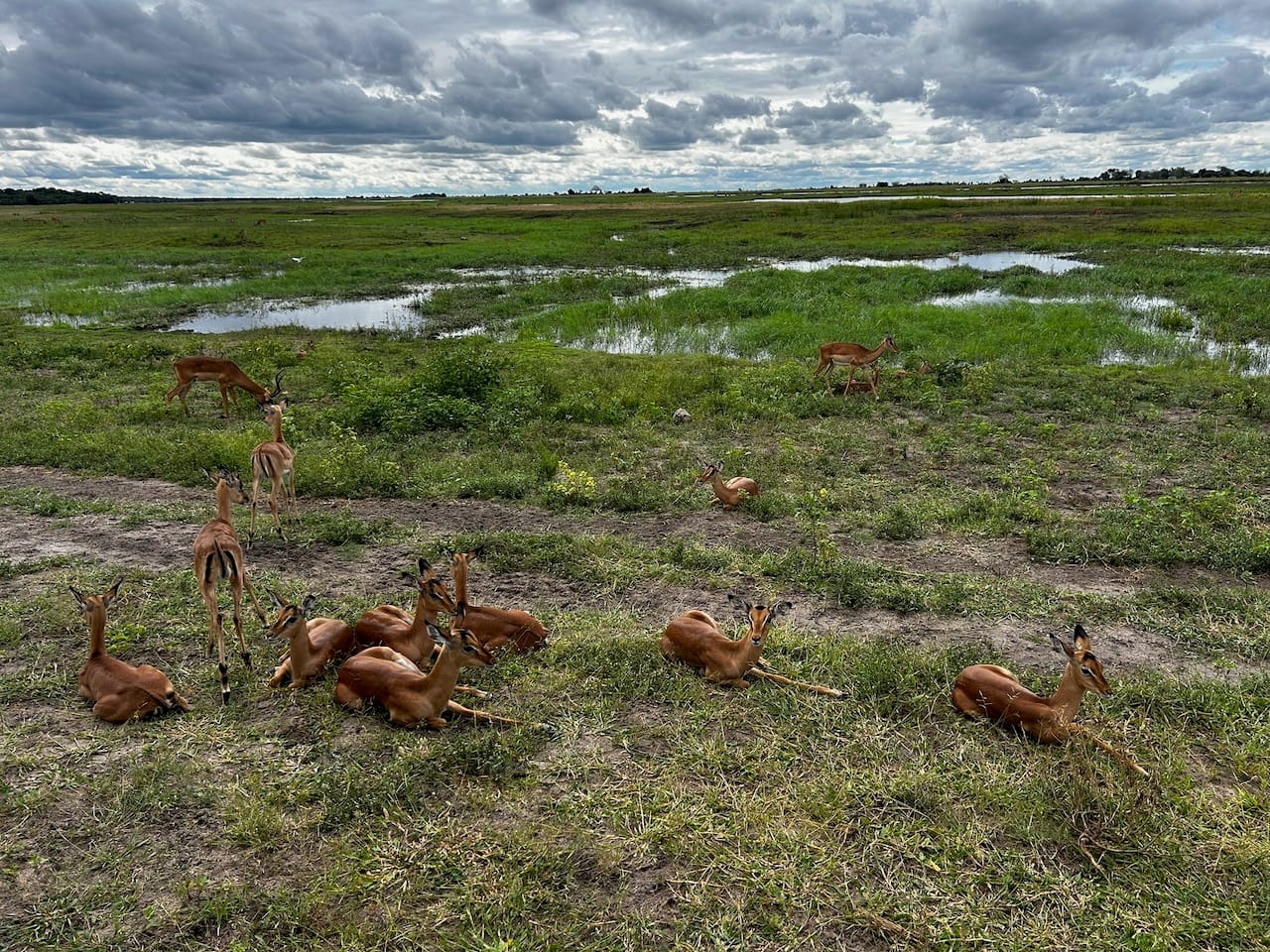
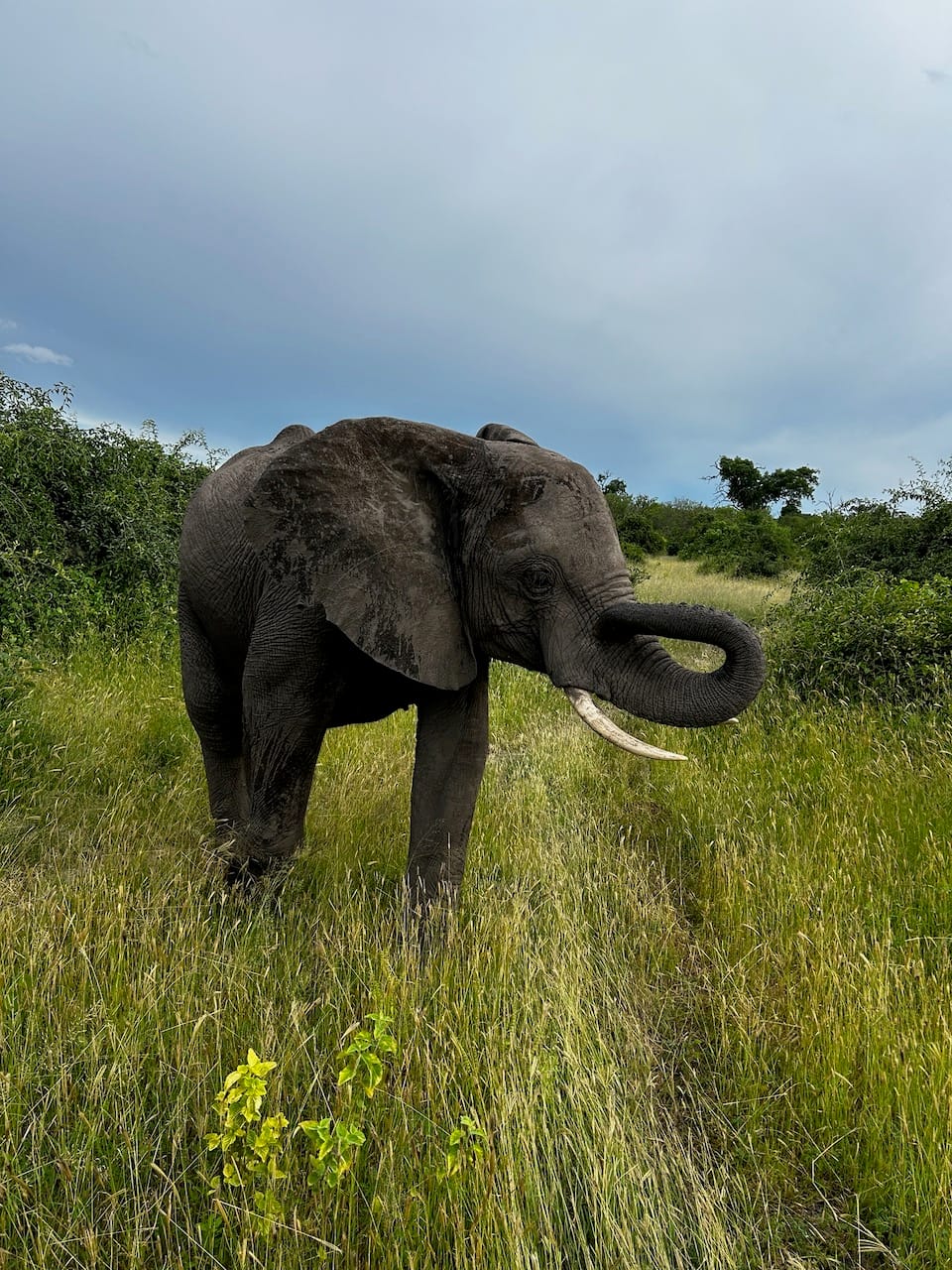
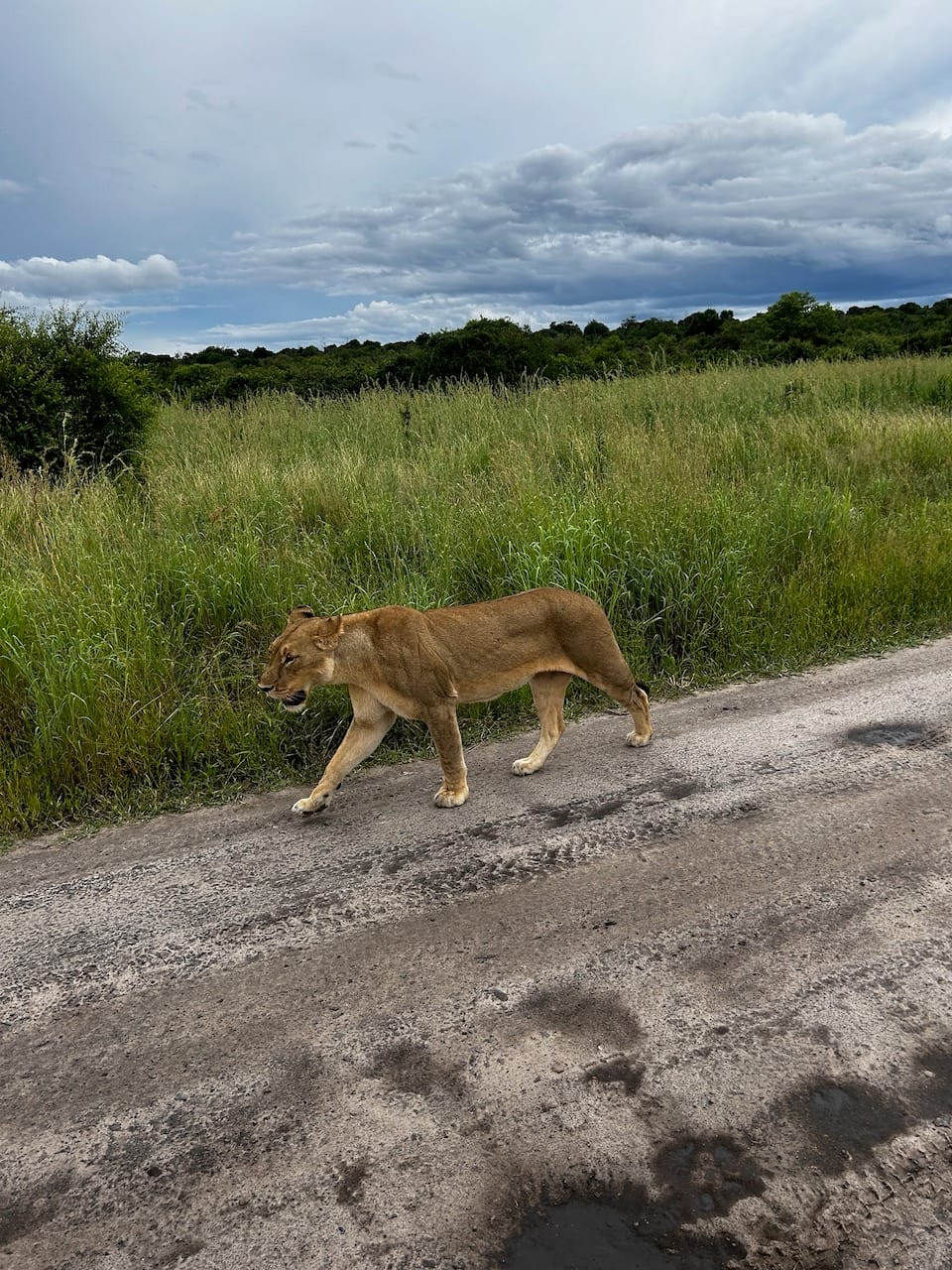
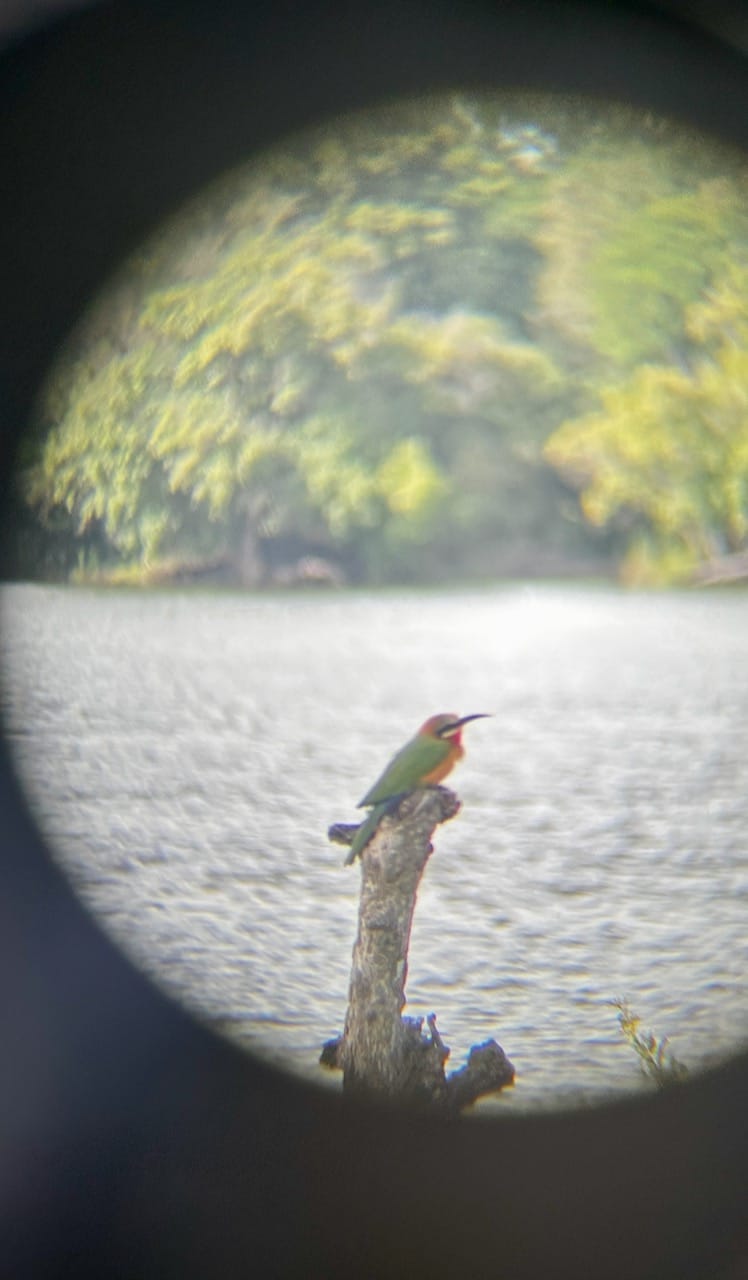
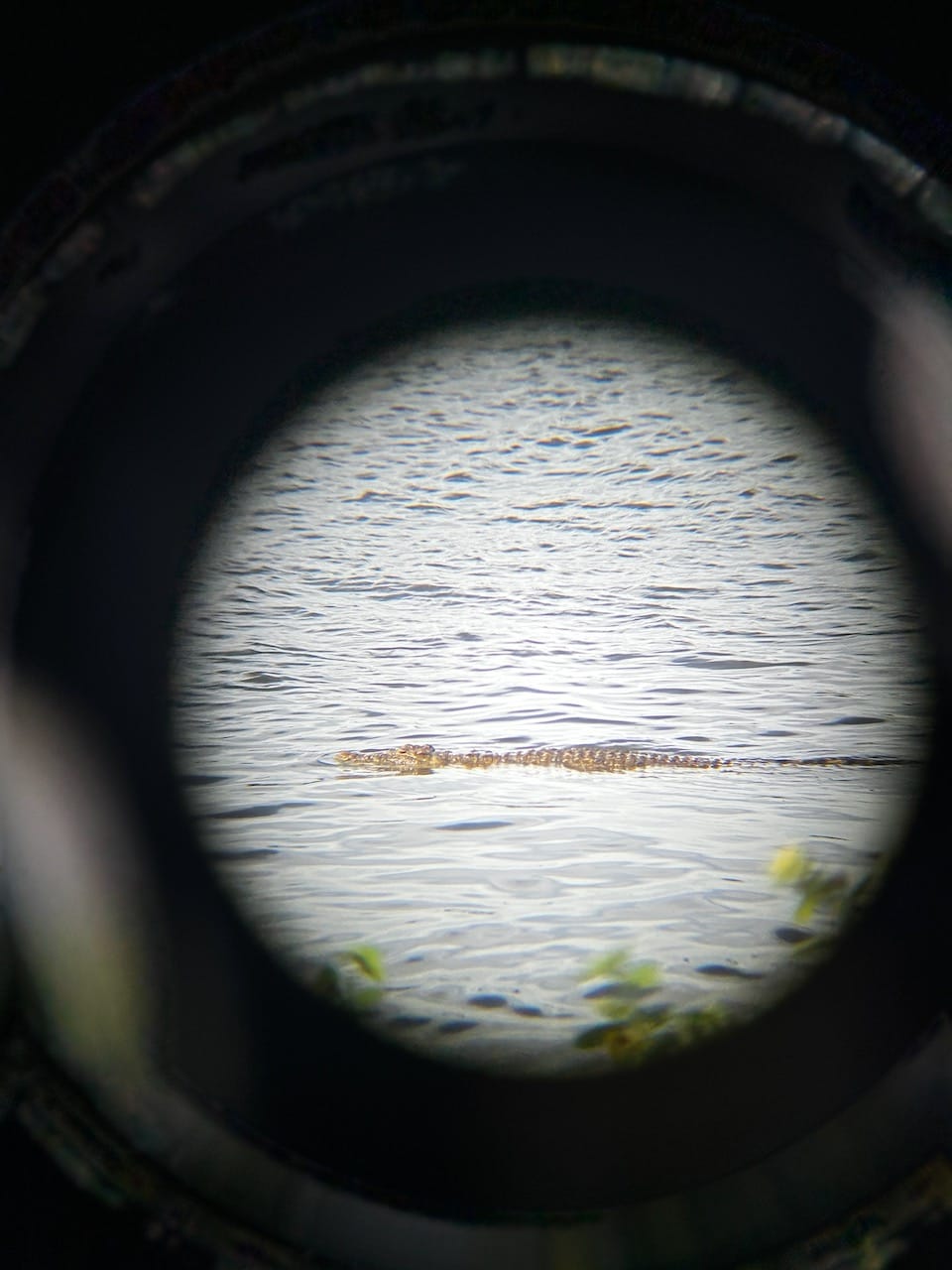
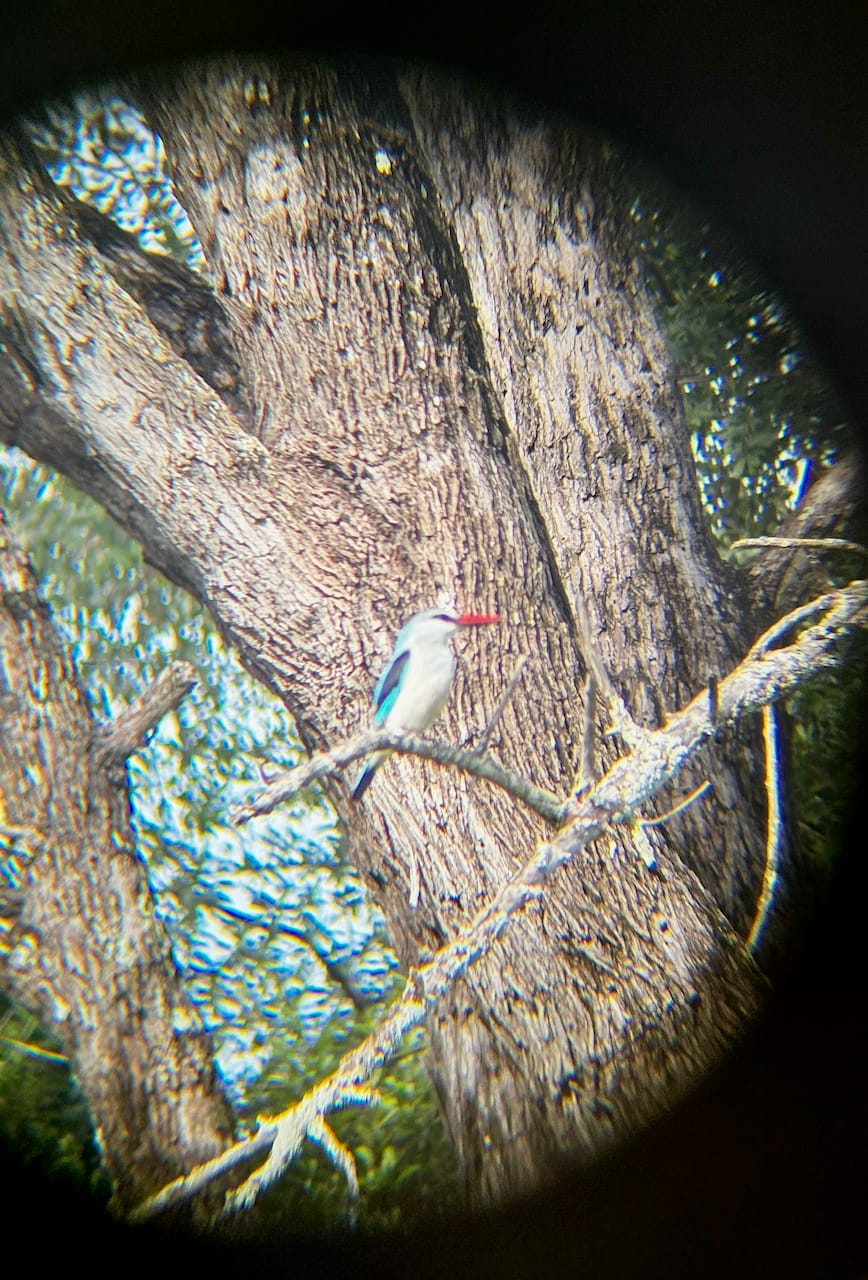
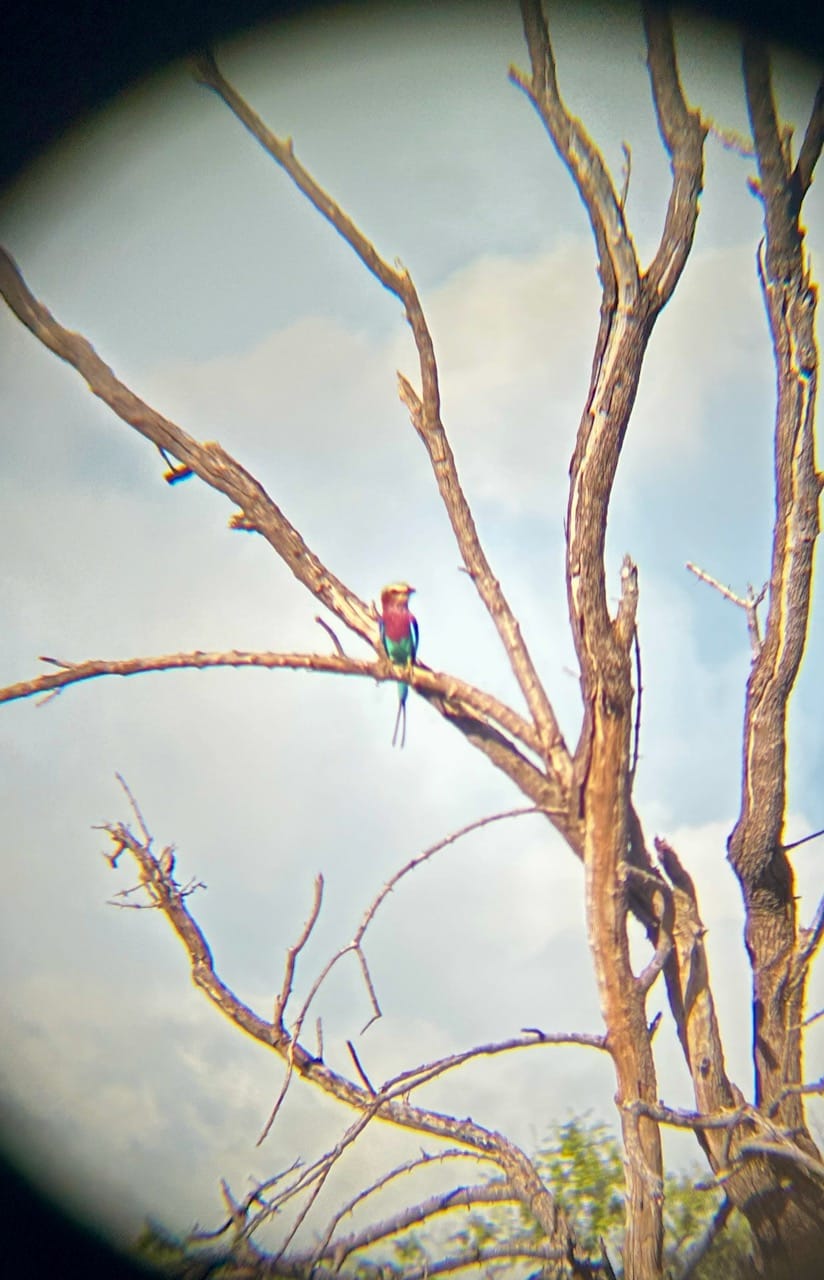
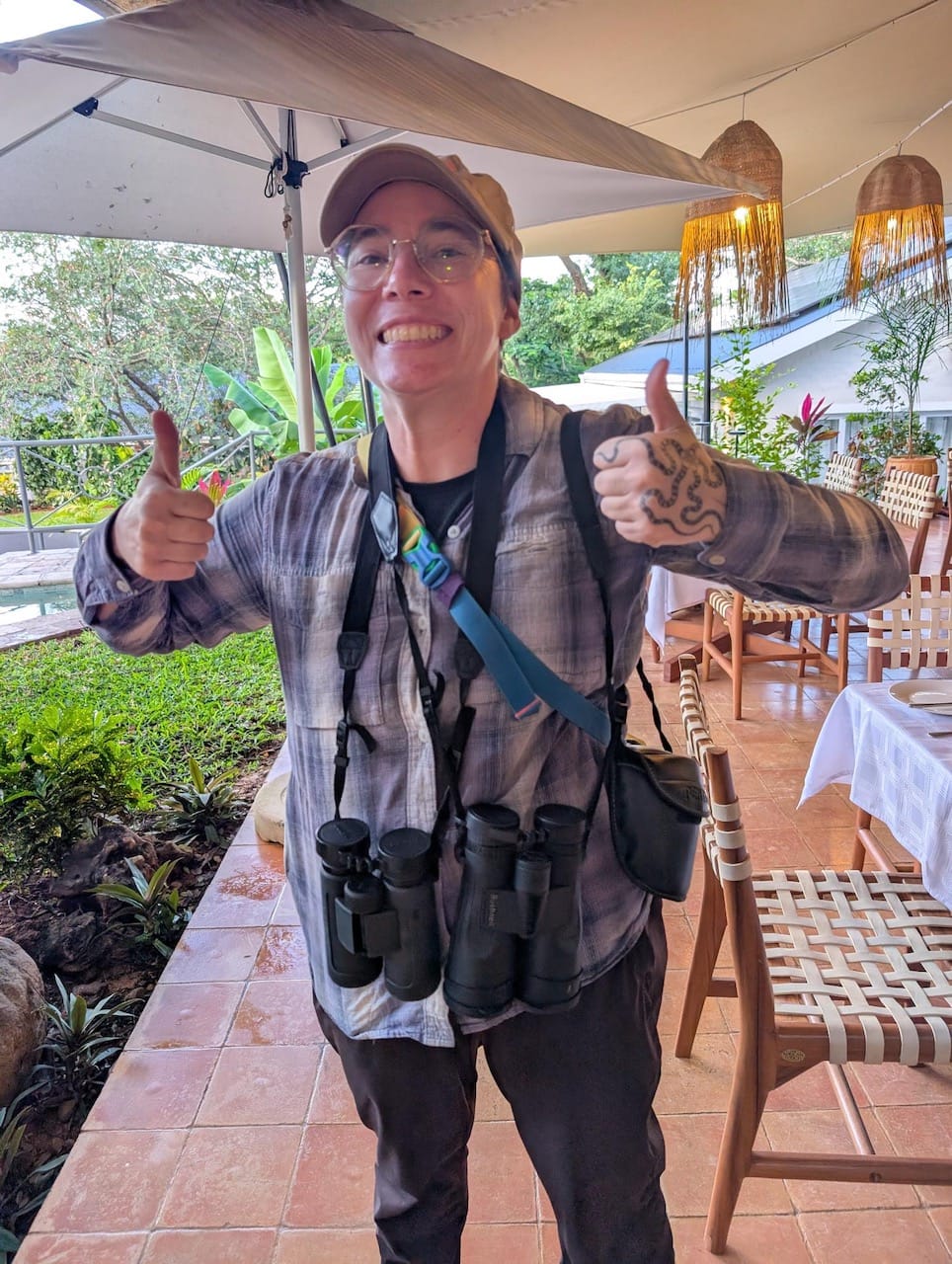
yes I am carrying three sets of binoculars
listening
Whenever I travel, I compulsively Shazam every song I hear so that I can build a little playlist later of what a place sounds like — or at least what people are listening to in the places we go. While we were driving around Namibia, I made us turn whatever local radio stations we could get (which, sometimes, was none at all).
Here's a playlist of what I heard in southern Africa this spring.
My favorite song is this one:
reading
- "The journalism and publishing fields remain weirdly mysterious to the writers who labor in them. Industry systems and practices still make little sense — economically, artistically, and otherwise. The remaining few writers with staff jobs still never know who will be next on the layoff lists. Now there are blacklists and deportation lists, too. And the pay mostly still sucks." 〰️ There is a new worker-owned outlet (created by some genius friends of mine) and I think you should subscribe to them if you're interested in how creative folks are getting by these days!
- "Women in sports have always been asked to endure danger and abuse, to prove in some way that they belong. They have been doubted when they are too fast, ridiculed when they are too slow. They have been told that they cannot survive, that they are too weak to compete. Their bodies are either too old or too young, too small or too big. For athletes, especially women, maybe there is no way out of these impossible dichotomies, this trap of doubt, except upwards." 〰️ Georgia Cloepfil wrote the best sports writing I've read in a minute, please read it.
- Black Glass by Karen Joy Fowler - I'm only about half way through this collection of short stories that I think I bought because Kelly Link recommended it. None of them have really grabbed me by the throat, I have to say, but they've been interesting.
- "I'm not trying to predict where we are on a trajectory of historical collapse. I'm only pointing out that launching an unprovoked war to overthrow a longstanding enemy under cover of negotiation to resolve a pretextual crisis is the sort of aggression typical of empires in, at a minimum, steep decline." 〰️ Spencer Ackerman on the recent US-Israel attacks on Iran.
- "Every leftist I know has a hard-on for high speed rail or mRNA vaccines. But the “left is missing out” blog positions generative AI as the only technology that matters." 〰️ Gita Jackson on why "the left hates technology" is completely untrue.
- "Despite the world I live in, I love the computer, and I am tired of these useless AI dipshits making the computers expensive." 〰️ Chris Person on how the AI-driven chip shortage is bad for everybody (that is a boring summary of a great piece, just read it).
- "Had Frank Lloyd Wright himself ever been responsible for an upside-down “H”?" 〰️ Paul Lukas on a fun typographical and architectural mystery.
- "In a quiet laboratory at Phuket Rajabhat University in southern Thailand, Preeyanuch Thongpoo is attempting to freeze time. As a molecular biologist, her work focuses on the cryopreservation of live larvae and algae to facilitate future restoration." 〰️ Isabel Esterman on not just the cryopreservation project, but what else needs to happen for this effort to have been worth it in the first place.
things I texted myself
I don't have a great memory, and so I do a lot of recording and note taking to try and make sure I remember stuff. And when it comes to little things, my method goes like this: when I have something I want to remember to do or lookup later, I text myself on Signal. When I've done it, I react to the message with a little ✅ so I know it's done. If it's not possible to complete, or I no longer care or need to do it, I react with a little ❌. Anything without an emoji is an open task.
Here is a list (edited to remove truly personal stuff) of things I texted myself in February:
- Make a rock database
- Where did the idea that “moist” is a gross word come from?
- Zar electric: https://music.apple.com/us/album/koyo/1794617150
- Buy a buff for future travelings
- Buy a garmin inreach?
- Mini golf group outing
- https://www.kala.org/education/adult-classes/
- Pangolin houseboat
- What happened to the college poster business?
- Setup Yubikey
- Fire Johannesburg
- Radiant Others podcast
- tell the TESTED team that we won another award (Best Non-Fiction Podcast at the Realscreen Awards)
- https://spacestation.fm/
- https://secure.thefreight.org/15709/15710-alash-260320
- https://www.youtube.com/live/X0dDh6W09So
〰️ OUT 〰️〰️
This is stuff I wrote, created, or published.
short stories
While I was traveling, I completely unplugged from my other work. I took Slack and Instagram off my phone, and setup a foreboding out of office reply. And it turns out, when I'm not constantly thinking about loads of tasks, meetings, problems, and the like I can bang out a whole lot of ideas. On our long journey to and from southern Africa, I wrote big chunks of several short stories that I'm excited about, and plan to finish in the next couple of months.
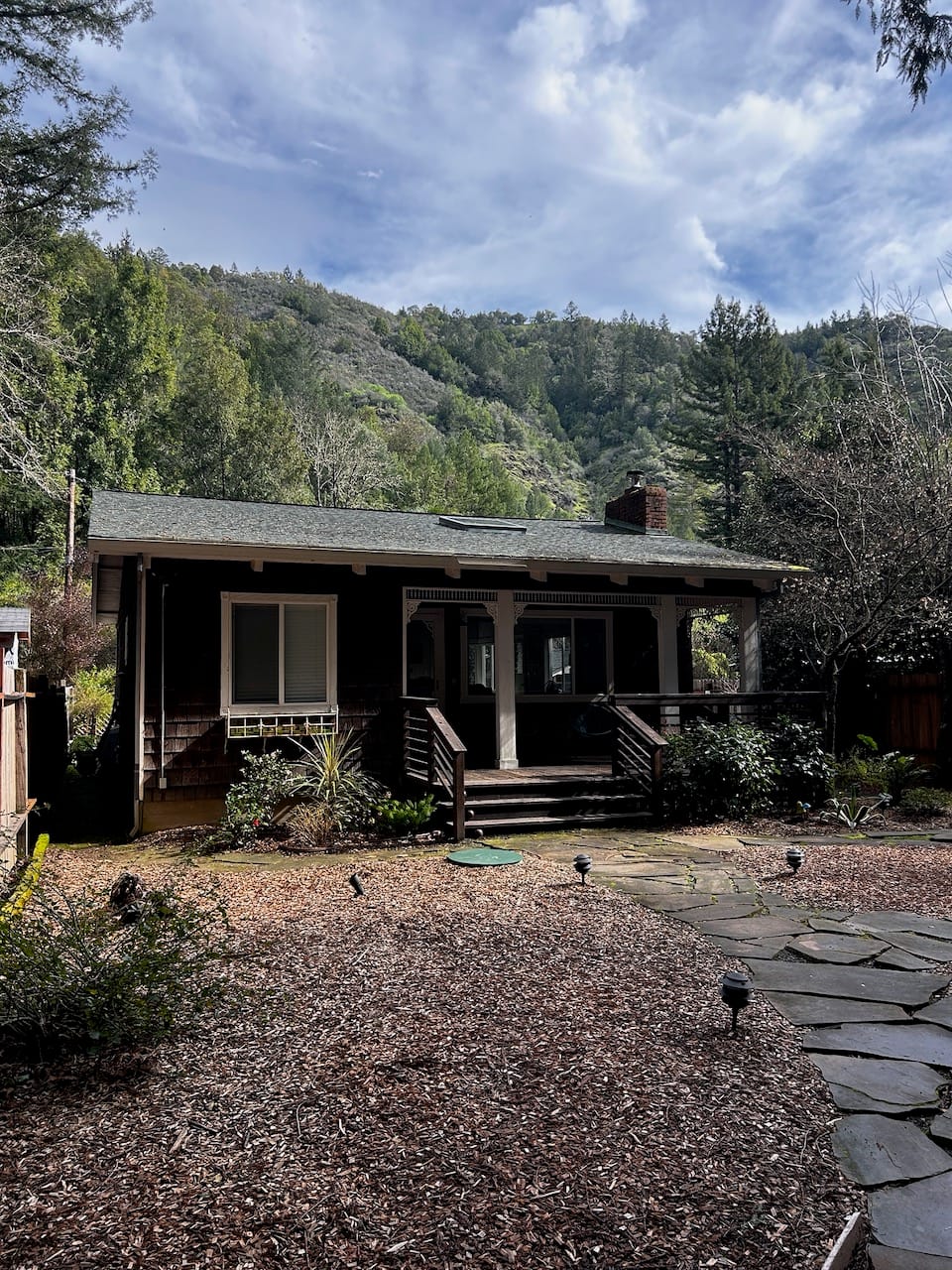
little guys trip (part 2)
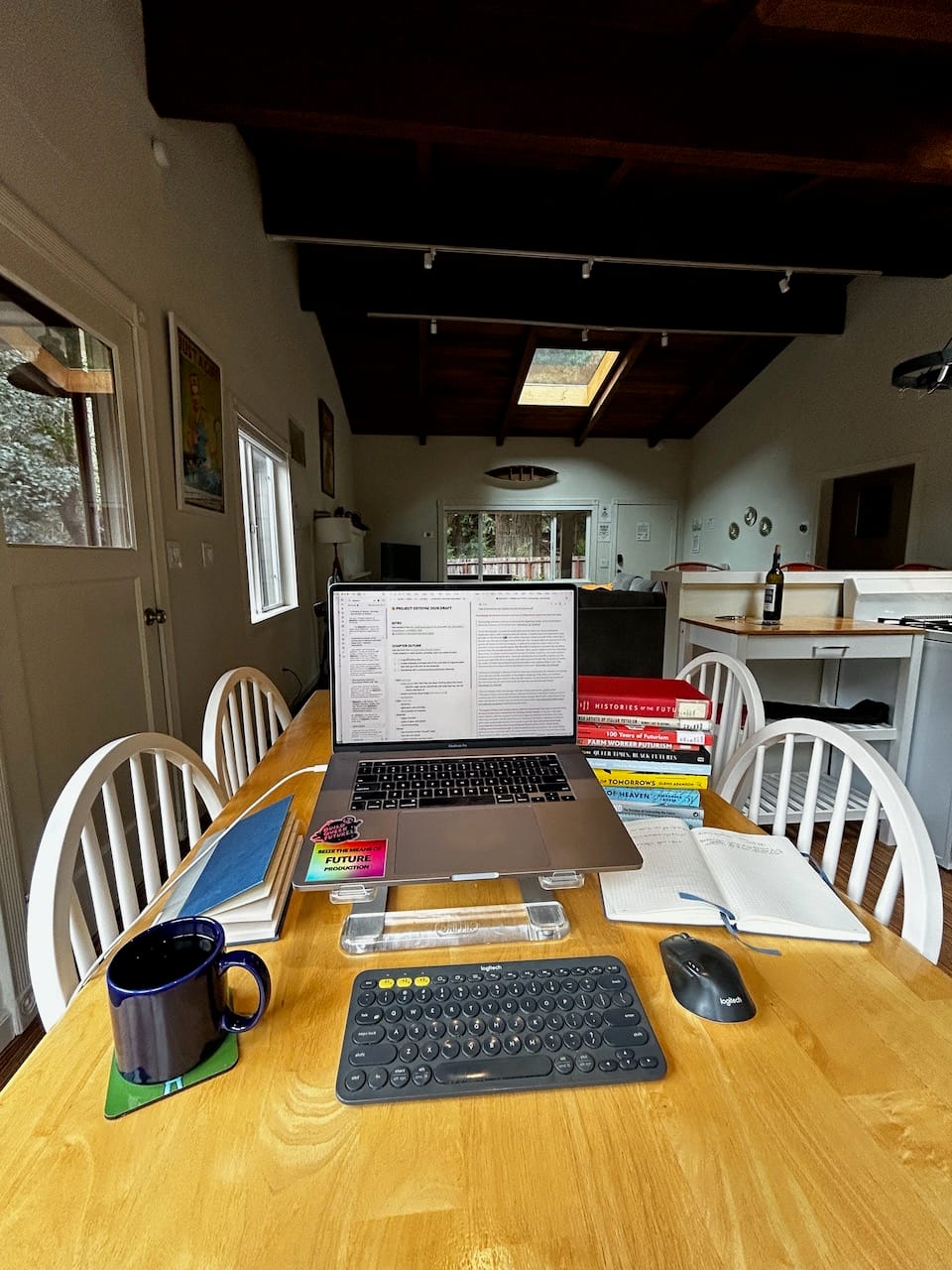
When I returned from my trip abroad I threw my clothes in the laundry and then two days later packed them up again to go spend ten days in Guerneville on a writing retreat. I do one of these every spring either with a friend, or myself. Last year I wrote about my time in Bolinas, working on PROJECT CUBENSIS (my in-progress novel). This time, I spent my time working on fleshing out PROJECT OSTOYAE which is the non-fiction proposal that I have been stuck on for way too long (more on that here).
I started working on this idea in 2018, and it's been hanging over me recently. Every time I opened it, I would feel despair. Last time I wrote to you about this project was in November when I wrote:
Two months ago I told you about my non-fiction book spiraling, and wrote "I tried to figure out a way to home in the argument of the book itself. I think I've done that, at least half way. I've got something that I think makes sense to me, in terms of a structure and a frame."
Well it turns out I was wrong. I spent the last month trying to work on the proposal with this new framing, and then realized that I had actually made the scope of the book wider, rather than narrower, and in fact that was the opposite of what I needed to do. Sigh. I am trying to tell myself that this is progress in some way. That all this tortured thinking is useful and will make the final product better — more focused, sharper, clearer. But if I'm honest it feels a bit like rearranging deck chairs on the Titanic a lot of the time.
At that point, I started to ask myself the big question: do I actually want to write this book at all?
I mean, at some point if something just isn't coming together you have to let it go, right?
I've recently been working with a coach to help me figure out how to reorient my work and, hopefully, move into a new phase of creative growth and approach. (This month, paying members are going to get more about that, and a full picture of all the projects I'm working on right now and my plans for the next year for each of them.) Mandy is amazing, and encouraged me to spend some dedicated time with the proposal not with the goal of finishing it, but instead with the goal of figuring out how I might get to an answer to that big question.
Of course, that's not easy to know. How do you ever know if you want to do something?
With Tested, I was spoiled. I needed to make that show. I couldn't take no for an answer. But most projects aren't like that. It's unrealistic to think that I will always be seized with a fugue state energy that turns me into some kind of podcast paladin. (And this is probably a good thing, on the whole, because I quite literally cannot afford to make a project like Tested again.) But it does leave me googling "how do you decide to do things" late at night.
I decided that probably the best way to figure this out, was to spend ten days trying to refine the proposal and to see if I found that research and writing interesting enough that I'd like to do it over and over again for about eighteen months. So every morning I woke up at 5:30 and got to work.
Ten days later, I had 12,491 words of a book proposal.
And the question? I had an answer, although not a mouth watering one.
I am interested in the ways that this book can cut across a lot of different topics: art, music, dance, economics, sociology, religion and combine into something that helps people understand how they think about the future in new ways. I like the idea of plucking little moments and scenes and images out of history and presenting them in a little row saying "look at this, and this, and this" as a way of constructing a path through time and an argument about futurism.
It's the prospect of it being a BOOK that I think I'm most nervous about. I could definitely write a newsletter with lots of bits and bobs in it. I could do a podcast for sure. At one point I got excited about creating an installation version of the book that would feature Italian Futurist recipes, dance performance, a guy with a jetpack, an architectural model of the Pruitt Igoe houses, and more.
But there's something about the book as an object that I think is a pause for me. My first book was incredibly fun to make, but a complete commercial failure. I couldn't get a single bookshop in the Bay Area interested in doing an event. It has a terrible Goodreads rating because the copies sent to advance reviewers featured comics that were impossible to read. Being a book means engaging in the world of books: reviews, book tours, press. On top of all of that, books are meant to be weighty and authoritative and serious, and that feels very intimidating.
There's a joke in a lot of creative work that people say they want to have done something. They don't want to write the book, but they want to have written the book. Oddly, I feel the opposite way. I'm interested in the work itself. I think it would be a fun puzzle. But the prospect of then putting it in front of people to evaluate and critique and tear apart for being reductive and shallow keeps me up at night.
For now, I'm putting it down. Not forever, but for the next few months. I might not have a crystal clear answer about whether this book is for me, but what I do know is that I'm more excited about finishing the fiction projects I have right now. So I'm going to follow that. I've made a week-by-week plan for the next four months (paying subscribers will get a peak at that this month) and I'm going to aim to finish some fiction first. Then, I will pick up the proposal again, finish it, and share it with my agent.
And then? Who knows. We'll all have to find out together.
That's all for this version of the monthly in/out. I used to apologize for these always being so long, but this year I'm not going to do that because it's not going to change.